<?xml version="1.0" encoding="utf-8"?><feed xmlns="http://www.w3.org/2005/Atom" xml:lang="en"><generator uri="https://jekyllrb.com/" version="3.10.0">Jekyll</generator><link href="https://benlonnqvist.github.io/news/feed.xml" rel="self" type="application/atom+xml" /><link href="https://benlonnqvist.github.io/" rel="alternate" type="text/html" hreflang="en" /><updated>2026-10-27T18:44:55+01:00</updated><id>https://benlonnqvist.github.io/news/feed.xml</id><title type="html">Ben Lonnqvist</title><subtitle>Ben Lonnqvist is Head of NeuroAI at Read/Write Labs. His research compares human and machine vision at scale and builds brain models precise enough to act on.</subtitle><author><name>Ben Lonnqvist</name><email>benhlonnqvist [at] gmail [dot] com</email></author><entry><title type="html">Journal of Neural Engineering: deep-learning features improve simulated prosthetic vision</title><link href="https://benlonnqvist.github.io/news/2026/jne-prosthetic/" rel="alternate" type="text/html" title="Journal of Neural Engineering: deep-learning features improve simulated prosthetic vision" /><published>2026-08-01T00:00:00+02:00</published><updated>2026-08-01T00:00:00+02:00</updated><id>https://benlonnqvist.github.io/news/2026/jne-prosthetic</id><content type="html" xml:base="https://benlonnqvist.github.io/news/2026/jne-prosthetic/"><![CDATA[<p>New paper with Elsa Scialom, Alban Bornet and Michael Herzog in the <em>Journal of Neural Engineering</em>. We use deep networks to predict which image features are diagnostic for recognising an object. Rendering those features in simulated prosthetic vision improves how well people recognise objects.</p>

<ul>
  <li><a href="https://doi.org/10.1088/1741-2552/ae9227">Paper (DOI)</a></li>
</ul>]]></content><author><name>Ben Lonnqvist</name><email>benhlonnqvist [at] gmail [dot] com</email></author><category term="paper" /><summary type="html"><![CDATA[New paper with Elsa Scialom, Alban Bornet and Michael Herzog in the Journal of Neural Engineering. We use deep networks to predict which image features are diagnostic for recognising an object. Rendering those features in simulated prosthetic vision improves how well people recognise objects.]]></summary></entry><entry><title type="html">ICLR 2026: Model-Guided Microstimulation Steers Primate Visual Behavior</title><link href="https://benlonnqvist.github.io/news/2026/iclr-microstim/" rel="alternate" type="text/html" title="ICLR 2026: Model-Guided Microstimulation Steers Primate Visual Behavior" /><published>2026-04-23T00:00:00+02:00</published><updated>2026-04-23T00:00:00+02:00</updated><id>https://benlonnqvist.github.io/news/2026/iclr-microstim</id><content type="html" xml:base="https://benlonnqvist.github.io/news/2026/iclr-microstim/"><![CDATA[<p>Our paper with Johannes Mehrer, Anna Mitola, Paolo Papale and Martin Schrimpf was presented at ICLR 2026.</p>

<p>We pair a model that predicts behaviour from both image input and cortical stimulation with a procedure that maps the model’s best stimulation sites onto monkey visual cortex. In two macaques, model-guided microstimulation steered their object choices. It is a proof of principle for visual prostheses that target higher-level visual cortex.</p>

<ul>
  <li><a href="https://arxiv.org/abs/2510.03684">Paper on arXiv</a></li>
  <li><a href="https://iclr.cc/virtual/2026/poster/10009439">ICLR 2026 poster page</a></li>
</ul>]]></content><author><name>Ben Lonnqvist</name><email>benhlonnqvist [at] gmail [dot] com</email></author><category term="paper" /><summary type="html"><![CDATA[Our paper with Johannes Mehrer, Anna Mitola, Paolo Papale and Martin Schrimpf was presented at ICLR 2026.]]></summary></entry><entry><title type="html">PhD thesis: Differences in Visual Perception in Humans and Deep Neural Networks</title><link href="https://benlonnqvist.github.io/news/2025/phd-defense/" rel="alternate" type="text/html" title="PhD thesis: Differences in Visual Perception in Humans and Deep Neural Networks" /><published>2025-09-05T00:00:00+02:00</published><updated>2025-09-05T00:00:00+02:00</updated><id>https://benlonnqvist.github.io/news/2025/phd-defense</id><content type="html" xml:base="https://benlonnqvist.github.io/news/2025/phd-defense/"><![CDATA[<p>I publicly defended my PhD thesis, <em>Differences in Visual Perception in Humans and Deep Neural Networks</em>, at EPFL. The thesis was advised by Michael Herzog and Martin Schrimpf.</p>

<ul>
  <li><a href="https://memento.epfl.ch/event/differences-in-visual-perception-in-humans-and-dee">Thesis defence announcement</a></li>
</ul>]]></content><author><name>Ben Lonnqvist</name><email>benhlonnqvist [at] gmail [dot] com</email></author><category term="milestone" /><summary type="html"><![CDATA[I publicly defended my PhD thesis, Differences in Visual Perception in Humans and Deep Neural Networks, at EPFL. The thesis was advised by Michael Herzog and Martin Schrimpf.]]></summary></entry><entry><title type="html">In the press: AI can’t see as well as humans, and how to fix it</title><link href="https://benlonnqvist.github.io/news/2025/contour-press/" rel="alternate" type="text/html" title="In the press: AI can’t see as well as humans, and how to fix it" /><published>2025-07-25T00:00:00+02:00</published><updated>2025-07-25T00:00:00+02:00</updated><id>https://benlonnqvist.github.io/news/2025/contour-press</id><content type="html" xml:base="https://benlonnqvist.github.io/news/2025/contour-press/"><![CDATA[<p>My work has recently been covered by the press.</p>

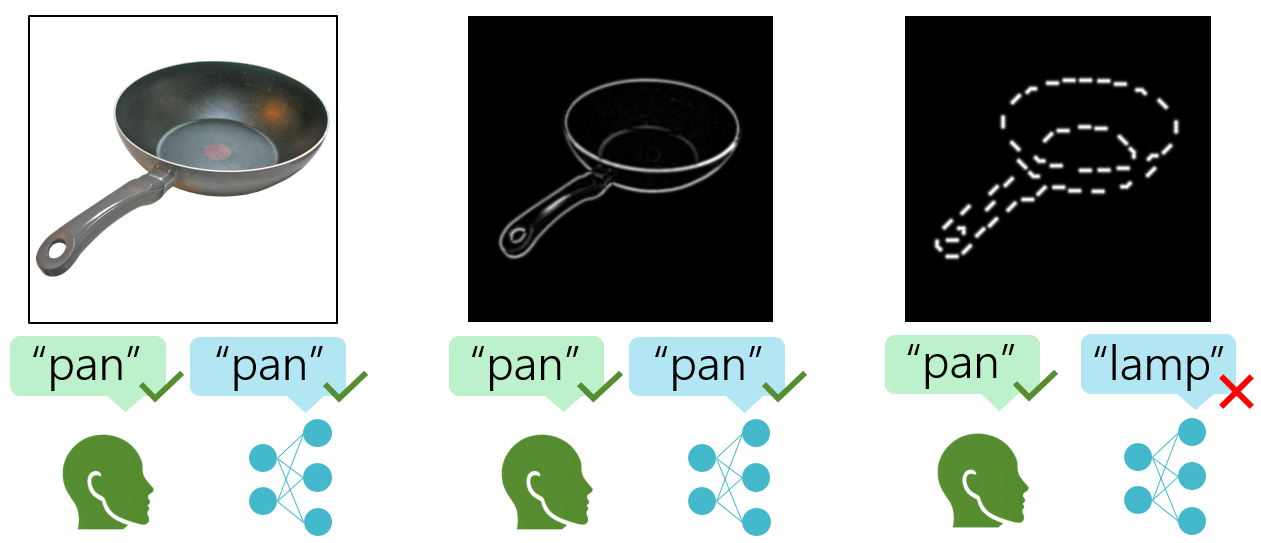
<p><img src="/assets/images/contour_graph_abstract.png" alt="Graphical abstract" /></p>

<h2 id="epfl-press">EPFL Press</h2>
<p>My <a href="https://openreview.net/forum?id=ftR9OuiUJA">paper on a large-scale comparison of humans and DNNs</a> has been picked up by media:</p>

<p><a href="https://people.epfl.ch/n.papageorgiou?lang=en">Nik Papageorgiou</a> from the EPFL press wrote a fantastic article on my work which can be read for free <a href="https://actu.epfl.ch/news/ai-can-t-see-as-well-as-humans-and-how-to-fix-it/">here</a>.</p>

<p>In addition, EPFL covered the work on its front page! Certainly a proud and humbling note to finish my Ph.D. with, having privately defended my thesis successfully just a couple weeks prior. Thank you EPFL!</p>

<p><img src="/assets/images/EPFL_frontpage.jpg" alt="EPFL Front Page" /></p>

<h2 id="swiss-press">Swiss Press</h2>

<p>Local Swiss media also picked up the article. 20 Minutes, a Swiss French-speaking magazine <a href="https://www.20min.ch/fr/story/un-grand-merci-vous-etes-403-000-a-lire-20-minutes-chaque-jour-103320129">read by over 400,000 people daily</a> published an article on the work, which you can read for free <a href="https://www.20min.ch/fr/story/epfl-le-cerveau-humain-depasse-l-ia-pour-reconnaitre-les-formes-103386131">here</a>.</p>]]></content><author><name>Ben Lonnqvist</name><email>benhlonnqvist [at] gmail [dot] com</email></author><category term="press" /><summary type="html"><![CDATA[My work has recently been covered by the press.]]></summary></entry><entry><title type="html">ICML 2025: Contour Integration Underlies Human-Like Vision</title><link href="https://benlonnqvist.github.io/news/2025/contour-icml/" rel="alternate" type="text/html" title="ICML 2025: Contour Integration Underlies Human-Like Vision" /><published>2025-07-15T00:00:00+02:00</published><updated>2025-07-15T00:00:00+02:00</updated><id>https://benlonnqvist.github.io/news/2025/contour-icml</id><content type="html" xml:base="https://benlonnqvist.github.io/news/2025/contour-icml/"><![CDATA[<p>Our <a href="https://openreview.net/forum?id=ftR9OuiUJA">new paper on a large-scale comparison of humans and DNNs</a> has been presented at ICML 2025! We show that many models fail when object contours are fragmented, and that the ability to do contour integration is critical for performance and robustness.</p>

<p><img src="/assets/images/contour_graph_abstract.png" alt="Graphical abstract" /></p>

<h2 id="resources">Resources</h2>

<ul>
  <li><a href="https://proceedings.mlr.press/v267/lonnqvist25a.html">Paper in the ICML 2025 proceedings</a></li>
  <li><a href="https://openreview.net/forum?id=ftR9OuiUJA">Paper on OpenReview</a></li>
  <li><a href="/download/ICML2025_poster_BL.pdf">Poster (PDF)</a></li>
  <li><a href="https://x.com/lonnqvistben/status/1914656558887186789">Thread on X</a></li>
</ul>]]></content><author><name>Ben Lonnqvist</name><email>benhlonnqvist [at] gmail [dot] com</email></author><category term="paper" /><summary type="html"><![CDATA[Our new paper on a large-scale comparison of humans and DNNs has been presented at ICML 2025! We show that many models fail when object contours are fragmented, and that the ability to do contour integration is critical for performance and robustness.]]></summary></entry><entry><title type="html">In the press: Latent Noise Segmentation in Tekniikka&amp;amp;Talous</title><link href="https://benlonnqvist.github.io/news/2025/lns-press/" rel="alternate" type="text/html" title="In the press: Latent Noise Segmentation in Tekniikka&amp;amp;Talous" /><published>2025-02-13T00:00:00+01:00</published><updated>2025-02-13T00:00:00+01:00</updated><id>https://benlonnqvist.github.io/news/2025/lns-press</id><content type="html" xml:base="https://benlonnqvist.github.io/news/2025/lns-press/"><![CDATA[<p>My paper on <a href="https://proceedings.mlr.press/v235/lonnqvist24a.html">Latent Noise Segmentation</a>, published at the top conference ICML, has recently been picked up by the Finnish press. I gave an interview to Finnish journalist Raili Leino at EPFL.</p>

<p>The article was published in the Finnish magazine Tekniikka&amp;Talous, the largest Finnish magazine on technical subjects. In fact, the magazine reaches over 500,000 people annually.</p>

<p>You can read the fantastic article on my work <a href="https://www.tekniikkatalous.fi/uutiset/a/ce8be5c9-349d-44b0-8462-242bc08ec275">here</a>.</p>

<p>Link to paper: <a href="https://proceedings.mlr.press/v235/lonnqvist24a.html">https://proceedings.mlr.press/v235/lonnqvist24a.html</a></p>]]></content><author><name>Ben Lonnqvist</name><email>benhlonnqvist [at] gmail [dot] com</email></author><category term="press" /><summary type="html"><![CDATA[My paper on Latent Noise Segmentation, published at the top conference ICML, has recently been picked up by the Finnish press. I gave an interview to Finnish journalist Raili Leino at EPFL.]]></summary></entry><entry><title type="html">CCN 2024 poster: current DNNs can’t integrate information across object discontinuities</title><link href="https://benlonnqvist.github.io/news/2024/ccn/" rel="alternate" type="text/html" title="CCN 2024 poster: current DNNs can’t integrate information across object discontinuities" /><published>2024-08-09T00:00:00+02:00</published><updated>2024-08-09T00:00:00+02:00</updated><id>https://benlonnqvist.github.io/news/2024/ccn</id><content type="html" xml:base="https://benlonnqvist.github.io/news/2024/ccn/"><![CDATA[<p>I attended Cognitive Computational Neuroscience in Boston this year and presented my new work on how <a href="https://2024.ccneuro.org/poster/?id=299">Current DNNs are Unable to Integrate Visual Information Across Object Discontinuities</a>.</p>

<p>We also have a more up-to-date poster, which you can download <a href="/download/CCN2024_poster_BL.pdf">at this link.</a></p>]]></content><author><name>Ben Lonnqvist</name><email>benhlonnqvist [at] gmail [dot] com</email></author><category term="talk" /><summary type="html"><![CDATA[I attended Cognitive Computational Neuroscience in Boston this year and presented my new work on how Current DNNs are Unable to Integrate Visual Information Across Object Discontinuities.]]></summary></entry><entry><title type="html">ICML 2024: Latent Noise Segmentation</title><link href="https://benlonnqvist.github.io/news/2024/lns-icml/" rel="alternate" type="text/html" title="ICML 2024: Latent Noise Segmentation" /><published>2024-07-23T00:00:00+02:00</published><updated>2024-07-23T00:00:00+02:00</updated><id>https://benlonnqvist.github.io/news/2024/lns-icml</id><content type="html" xml:base="https://benlonnqvist.github.io/news/2024/lns-icml/"><![CDATA[<p>Our paper on: <a href="https://proceedings.mlr.press/v235/lonnqvist24a.html">Latent Noise Segmentation</a> has been accepted at ICML 2024! We show that neural noise can be used for unsupervised segmentation, and doing so reproduces many hallmark results of human perceptual grouping.</p>

<p>Link to paper: <a href="https://proceedings.mlr.press/v235/lonnqvist24a.html">https://proceedings.mlr.press/v235/lonnqvist24a.html</a></p>]]></content><author><name>Ben Lonnqvist</name><email>benhlonnqvist [at] gmail [dot] com</email></author><category term="paper" /><summary type="html"><![CDATA[Our paper on: Latent Noise Segmentation has been accepted at ICML 2024! We show that neural noise can be used for unsupervised segmentation, and doing so reproduces many hallmark results of human perceptual grouping.]]></summary></entry><entry><title type="html">New preprint: Latent Noise Segmentation</title><link href="https://benlonnqvist.github.io/news/2023/latent-noise-segmentation/" rel="alternate" type="text/html" title="New preprint: Latent Noise Segmentation" /><published>2023-09-29T00:00:00+02:00</published><updated>2023-09-29T00:00:00+02:00</updated><id>https://benlonnqvist.github.io/news/2023/latent-noise-segmentation</id><content type="html" xml:base="https://benlonnqvist.github.io/news/2023/latent-noise-segmentation/"><![CDATA[<p>Check out our new pre-print: <a href="https://arxiv.org/abs/2309.16515">Latent Noise Segmentation</a>! We show that neural noise can be used for unsupervised segmentation, and doing so reproduces many hallmark results of human perceptual grouping.</p>

<p>Link to pre-print: <a href="https://arxiv.org/abs/2309.16515">https://arxiv.org/abs/2309.16515</a></p>]]></content><author><name>Ben Lonnqvist</name><email>benhlonnqvist [at] gmail [dot] com</email></author><category term="preprint" /><summary type="html"><![CDATA[Check out our new pre-print: Latent Noise Segmentation! We show that neural noise can be used for unsupervised segmentation, and doing so reproduces many hallmark results of human perceptual grouping.]]></summary></entry></feed>